Have you got a need for speed?
From thrill-seekers to passengers who want to reduce their travel times, high-speed transportation has many perks. In some cases these transport networks can be highly efficient, improve connectivity and may even promote economic growth.
But what are the fastest ways to travel on road, rail and air? Here are some of the speediest ways of getting from A to B as of March 2026.
Train
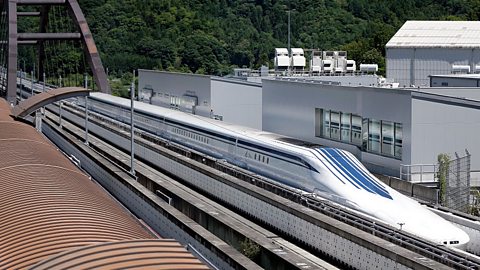
Reaching speeds of 375 mph, Japan’s experimental L0 Series Maglev holds the record for the world’s fastest train. The high-speed maglev, meaning magnetic levitation, is currently being developed and tested by the Central Japan Railway Company and set the record in 2015.
These speeds far surpass those of European trains, where the fastest rail vehicles peak between 190 to 220 miles per hour.
Japan’s train systems are renowned for being the most modern and reliable in the world. The new train uses technology which allows the carriages to float above the track, propelled by electric motors.
But despite achieving record-breaking speeds in testing, passengers hoping to take a journey aboard the bullet train may have a long wait. The service, which was originally scheduled to open in 2027, has been delayed until 2034 and 2035.
Car
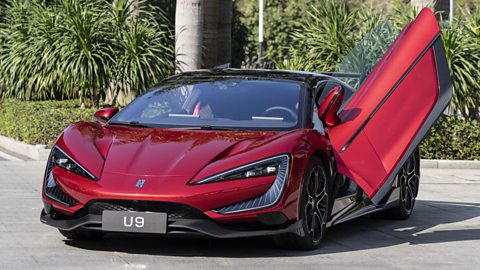
In August 2025, the Yangwang U9 Xtreme claimed to set the record as the fastest road-legal production car on the planet, reaching a staggering 308 mph. It achieved a time of six minutes and 59 seconds on Germany’s challenging 13-mile race track, Nürburgring. As a result, it secured the fastest lap title in the ‘Electric Super Sports Cars’ category.
Created by the German car designer Wolfgang Egger, the high-performance super vehicle is fully electric. But for those hoping to get their hands on the hyper car, it may be harder than you think. Production has been limited on the vehicle, which is currently expected to be released in 2027, meaning that there will only be 30 on the market.
But as well as the fastest, it is also expected to have a largely inflated price tag, particularly in comparison to the normal U9 model, which sells in the region of £200,000.
Plane
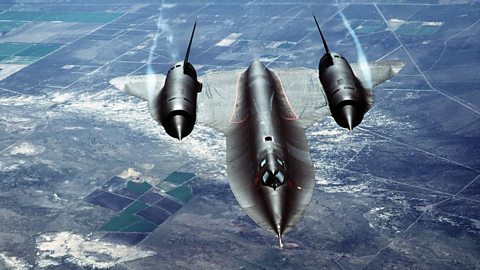
Flying into first place as the world’s fastest aircraft is the Lockheed SR-71 Blackbird. Despite being developed in the 1960s, it is considered to be one of the most advanced aircrafts of its type.
Flying at three times the speed of sound, it can reach speeds of 2,100mph. That’s almost four times as fast as the average cruising speed of a commercial airliner. But it is also one of the highest flying aircrafts and in 1976, it set the world record for sustained altitude flight for flying at 85,000ft.
The SR-71 is remembered for its use during the Cold War, where it was employed by the US military to gather intelligence. The craft was capable of surveying roughly 100,000 square miles of territory in just one hour. The plane was retired by the US Air Force in 1999.
This article was published in March 2026
Four amazing means of transport from around the world
From Wales to the Arctic, BBC Bitesize looks at four brilliant forms of transport from around the world.

Four unbelievable airports from around the world
From Scotland to Nepal, take a look at some of the most dramatic, scenic and unexpected airports from across the world.
Going up: Five incredible elevators from around the world
BBC Bitesize explores some of the world's most unusual lifts