For many years it’s been assumed that Bristol and Liverpool were the only main players in the slave trade.
But new evidence suggests Birmingham not only profited from, but also had a hand in supporting and defending the mass enslavement of Africans. 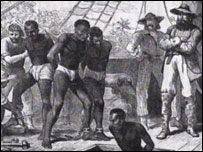 | | How much do young people know about it? |
2007 marks the bicentenary of the outlawing of the transatlantic slave trade. But by March 25th 1807, millions of Africans had already been forcibly transported to the Americas to work. Confronting the pastProfessor David Dabydeen of Warwick University believes it could have been as many as thirty million. Conditions for them were horrific. 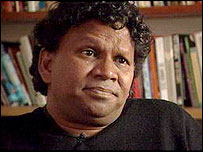 | | Professor David Dabydeen |
“A third of those people died going over. Another third died on the plantations within a few months of arriving because of new tropical diseases. Others died because of sheer hard work. It was a nasty unimaginable way of treating people as goods, with no sense of humanity.” These days the brutality of slavery is universally condemned in Britain. But does the desire to put the darker chapters of our history behind us mean we’re also failing to confront them? Padlocks, irons, chains and muzzlesMusician Soweto Kinch grew up in Handsworth. Like many others, he assumed Birmingham had little to do with the transatlantic slave trade. During the course of our programme he’s seen plenty of evidence to change his mind. 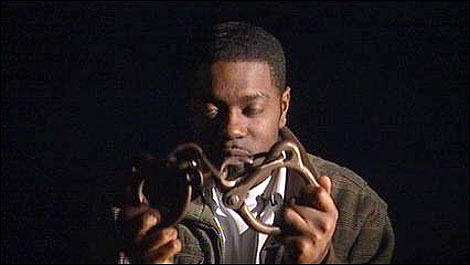 | | Birmingham's slave trade links |
“Birmingham was the main supplier of iron and ironware to Africa”, says Professor Dabydeen. “Padlocks, irons, chains muzzles - all the instruments to police the slave trade. Of course that made an enormous amount of money.” And there were the guns.“From the 1760’s onwards a hundred and fifty thousand guns on average were exported to Africa. Birmingham armed the slave trade.” "Another piece of evidence which has come to light is a pro-slavery petition dating from 1789. It was signed by people involved in industry in Birmingham who feared their livelihoods were under threat from the abolitionist movement. A journey of discovery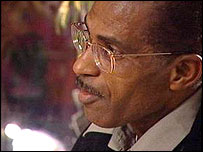 | | Dr Clive Harris |
“I’d seen pictures of slave ships. I’d heard about the plantations but nothing prepared me for the sheer scale and brutality of the system. I was also shocked to find out that my city, Birmingham, was so involved.” As Britain prepares to commemorate the 200th anniversary of the abolition of the slave trade, some are arguing for a greater openness about the past. Dr Clive Harris, of the African Caribbean Millennium Centre says we have still got a long way to go. “I think Birmingham, like the whole of the country, is in denial. I am asking for a truthful account of British history.” Watch the full video report below |