 | 28 October 2014 |

| |
| BBC Homepage | | |
| |||
| Contact Us | | |
Nature featuresYou are in: Berkshire > Nature > Nature features > Bitten by the wildlife bug Bitten by the wildlife bugBy Linda Serck Local conservation hero Martin Woolner from Maidenhead has dedicated his life to maintaining and preserving Berkshire's natural habitats. Here he introduces us to the wonderful world of woodlice! 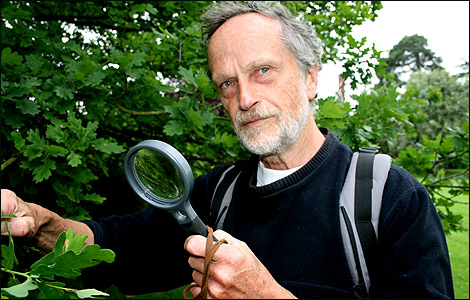 Conservation hero: Martin Woolmer How many people do you know that can identify different species of woodlice? Well, wildlife conservationist Martin Woolner is one. Meeting up with the 64-year-old at the Braywick Nature Centre in Maidenhead, he lifts up an old tree stump and quickly espies a woodlouse scurrying off into a seam. "Ah, that's the Porcellio Scaber species, otherwise known as the Wartyback Woodlouse", Martin exclaims. As we both admire the woodlouse, which is desperately trying to keep still in the hope we'll go away, it's actually quite lucky BBC Berkshire has been able to meet up with the busy conservationist in the first place.
On Tuesdays he works at a local conservation area in Burnham Beeches from 9am to 5pm. On Thursdays, also from nine to five, he works as part of a team from the Berks, Bucks & Oxon Wildlife Trust (BBOWT) on one of the 20 nature reserves in the area. Every other Sunday he carries out conservation-related activities for various local authorities and his work as a tree warden takes up a day-and-a-half per week. On top of all that he gives talks for the Wildlife Trust and travels to local schools to spread the word of wildlife, even helping to paint a rainforest mural on the climbing wall of a school in Maidenhead. "I want to get the message across that what we've got in the area is really quite valuable" says Martin. "Conservationists are important as the eyes and ears for all sorts of wildlife." From what started as pond-dipping in his teenage years that led to working as a biologist looking at ecology of various animal species, he's now rediscovered his love of insects. "Insects help run the system," he explains, "they help make the woodland tick. 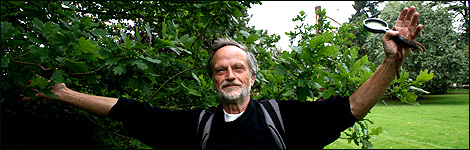 Martin Woolmer loves wildlife "There are many sorts which have different roles, some of them eating the leaf material, others help to decompose material and return nutrients back into the soil which keeps the plant system going." He spends a good deal of time helping the local wildlife trust understand what's on their reserves. He also helps out at BBOWT events to introduce people to insects and all the different types. "Once they begin to look at these they can get bitten by the bug!" says Martin. And having acquired a microscope two years ago Martin spends hours studying centipedes, millipedes, spiders, and, in particular, "the wonderful world of woodlice". "First of all they adapt themselves to live in different situations," says Martin, explaining his fascination with the little creepy crawly. He adds: "Their ancestors used to live in the sea and then migrated on to land many thousands of years ago. "They have an interesting behaviour, some of them are known as rollers, some of them are known as crawlers, some of them will actually freeze when you disturb them and pretend that you're not there." A bit like that Wartyback Woodlouse we spotted under that tree stump. 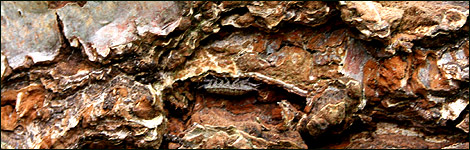 Ah, that'll be the Porcellio Scaber species. Martin is so fascinated by wildlife that a two-mile walk will last six hours, looking at everything and anything that comes across his path. "We don't put in miles we put in quality metres," he says. "Like any enquiring scientist, once you start asking questions it raises more questions and then you get hooked." Martin works tirelessly to maintain a nature reserve's biodiversity and to create different habitats to encourage animals and plants to occupy them. But unfortunately other factors have led to certain species of wildlife disappearing from Berkshire. "I do believe even common species are locally under threat," says Martin gravely. "For example, we lost thousands of the common toad in Maidenhead over the last few years due to the aspirations of a local property developer. "Because that common species was not protected by law, we couldn't apply the law to try and modify what was being done to that habitat." 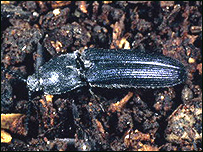 The Beetle Even something as simple as getting rid of an old tree stump in your garden can upset the haven of some pretty special insects such as the Violet Click Beetle. "In our patch we've probably got some of the best populations in the south east of England," says Martin, "and we only have these because there enough old trees and old stumps of trees. He adds: "Old wood is a wonderful reserve for all sorts of wildlife, some of which may be common locally but may become less common and somewhat threatened by all sorts of other activities like getting rid of old stumps by stump grinders, something which I get annoyed about." It's people such as Martin who not only selflessly work to improve our natural habitats for the benefits of wildlife and for our enjoyment, but also help make others aware of the impact of our actions. 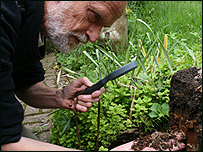 Martin Woolmer looks for woodlice "I believe we owe it to the next generation to pass on a better world than we're doing at the moment," says Martin. "My generation and previous ones have fouled up various bits of the environment not to the benefit of wildlife." "Fairly small changes to habitat can make a big change to wildlife. "We still don't understand the precise needs of all sorts of wildlife, you might change one thing in a place and it puts a particular type of wildlife, plant or insect at risk." So next time you're removing something from your garden, take a look to see if you're not inadvertently eliminating the home of an insect. And next time you espy a woodlouse zipping away under some old bark, you can impress your friends by saying, "ah, I do believe that's the the Porcellio Scaber species." Find out more about the Berks, Bucks & Oxon Wildllife Trust: The BBC is not responsible for the content of external websites last updated: 31/03/2008 at 11:32 Have Your SayCicely Wright thall@earthwatch.org.uk Tim Hall (Earthwatch Europe) Sarah Staunton-Lamb Michael Woolner SEE ALSOYou are in: Berkshire > Nature > Nature features > Bitten by the wildlife bug |
| | About the BBC | Help | Terms of Use | Privacy & Cookies Policy |
