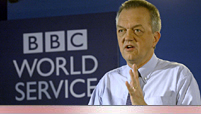
This is the text of an email from Nigel Chapman, Director BBC World Service, to BBC Global News staff on 13 January 2009.
Dear colleagues,
Tomorrow, Wednesday 14 January 2009, just before 13:30 GMT, we launch our new BBC Persian television channel. I’m writing to you today to tell you a little bit more about the channel, why it’s important for BBC World Service and what difference it will make to our audiences in Iran, Afghanistan and the wider region. BBC Persian TV will broadcast for eight hours a day, seven days a week, in peak viewing time in Iran, from 17:00 to 01:00 local time (13:30 to 21:30 GMT). It is freely available to anyone with a satellite dish in the region (via Hotbird and T12 satellites) as well as online, via this page on bbcpersian.com. BBC Persian television is integrated with the BBC's existing radio and online outputs to provide the most modern news and information service for Persian-speakers. On the eve of the launch, our first thoughts are with the team in television, as well as their colleagues in radio and online, who have been working with such commitment to get to this point. At its core, the channel will offer high-quality accurate, impartial, editorially independent BBC journalism from a global perspective. The channel will cover international and regional stories in a way which is relevant to its audiences. Its news and information programming will focus on global issues as well as Iran and the surrounding region. BBC Persian TV will cover a broad agenda including politics, culture, science, business, technology, social issues and the arts. It will also show investigative current affairs programmes, alongside the best of the BBC's factual, cultural and educational documentaries.
BBC Persian television carries multimedia discussion programmes and debates, to encourage a wide range of voices to come forward and discuss what concerns them. The BBC Persian television and radio programmes and online services are produced from studios and newsrooms in W1 and Bush House. However, the key to the BBC’s coverage of the world lies in our vast network of correspondents. BBC Persian draws upon the BBC's unmatched newsgathering resources across the world, with eye-witness reportage and expert analysis from more than 250 journalists and correspondents in more than 70 international offices and bureaux. That resource is immensely valuable and a unique advantage for a global news organisation. BBC Newsgathering maintains a bureau in Tehran for its English-language services, although the Iranian authorities have refused the BBC permission to maintain a BBC Persian presence in Iran. Working alongside the BBC’s international network, there are BBC Persian journalists stationed around the world including key locations such as Beirut, Dushanbe, Islamabad, Istanbul, Jerusalem, Kabul and Washington. Despite not having a BBC Persian correspondent in Iran, the team are confident that they will be able to fully reflect the stories, culture and issues that affect Iran today. Tomorrow’s launch delivers on a promise we made as part of our current Spending Review. It fulfils part of our commitment to deliver on the Creative Future of the BBC by Global News. For me and the team, tomorrow marks the end of a two year period of lobbying and preparation to launch the channel. It has been a major undertaking to recruit and train more than 150 staff, including almost 100 broadcast journalists. My thanks to everyone involved in this major launch and all the months of hard work behind it. So, please join me in wishing the whole of BBC Persian the very best for the launch tomorrow, and the success they deserve. Nigel
|