Situated on the slopes of the Sierra Nevada mountains in Spain lies the colourful city of Granada, home to a rich and vibrant culture and proud owner of one of the remaining ‘jewels’ of the Islamic world which once ruled here – the Alhambra Palace.
The name Alhambra is derived from the Arabic ‘al-qalat-al-Hamra’ which means the red castle. But how did this red castle come to be?
Following the Islamic conquest of Spain in the early 8th Century the ‘Moors’ as they became known by the Christians, divided Spain or ‘Al Andalus’ into 12 kingdoms – the capital of which became Granada.
The Moorish dynasties ruled Spain from the early 8th to the mid 15th Century and the palace was built and extended over several years during this era. But it wasn’t until the Nasrid dynasty came into power in the early 13th Century that the then Sultan - Ibn Nasr - took an interest in transforming it from a defense structure into a luxuriant palace city to rival the great fortresses of his enemies.
The whole structure of the Alhambra is made up of a number of palaces grouped together, it’s a small city. The northern walls of the site are marked by a series of towers or ‘torres’ as they are known, like individual smaller palaces.
The Torre de las Infantas, is believed to be one of the last Nasrid additions to the Alhambra. Some say it is where the Sultan’s daughters lived. The Torre de las Infantas isn’t open to the public, but Desi DNA was granted special license to step inside.
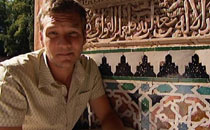
“The place is steeped in mythology – it’s romanticized, you expect to be blown away with wonder and magnificence. And those factors are there for sure, but you don’t see them immediately,” says Charlie. "It’s when you view the palace in different light at different times of the day that you really start to appreciate the true complexity of its architecture."
The Hall of the Two Sisters, dominated by a magnificent honeycombed ceiling made up of 5000 cells, is said to be the most intricate one in the whole of the Islamic world. There are also no end to inscriptions and poems found on the walls inside the quarters. “If the poets were employed to ‘market’ their leaders and their faith I think it’s safe to say that they did their job well,” believes Charlie.
So, given the history of the Alhambra, where does it stand politically today?
In the programme Charlie catches up with Maria del mar Villafranca, the director of the Alhambra, who explains there is no data to show how events like 9/11 or the London and Madrid bombings have affected the attraction. “But we have found that American tourism was reduced, but in the same way that it was reduced all over Spain and Europe.”
Located over a vast site its no surprise that it a huge maintenance programme to keep the Alhambra looking so beautiful. But according to Charlie it’s not just about the building. "It’s also the atmosphere – it’s the sound of the Alhambra, it’s the birds, it’s the water, it’s everything that they wanted to keep."



Your comments
Share your comments on the Alhambra feature in this edition of Desi DNA and we'll publish the best comments here.
Disclaimer: The BBC will put up as many of your comments as possible but we cannot guarantee that all e-mails will be published. The BBC reserves the right to edit comments that are published.