|
 |
 | | | | | | ||||||||||||||||||||||||||||||||||||||||||||||||||||||||||||||||||||||||||||||||||||||||||||||||||||||||||||||||||||||||||||||||||||||||||||||||||||||||||||||||||||||||||||||||||||||||||||||||||||||||||||||||||||
| | | You are in: World: Middle East | ||||||||||||||||||||||||||||||||||||||||||||||||||||||||||||||||||||||||||||||||||||||||||||||||||||||||||||||||||||||||||||||||||||||||||||||||||||||||||||||||||||||||||||||||||||||||||||||||||||||||||||||||||||||
|
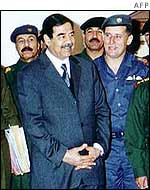
| | Saturday, 1 February, 2003, 07:47 GMT Iraq to chair UN disarmament talks  Iraq's disarmament is still in question
Iraq, by an ironic twist, is to be the new chairman of the UN Conference on Disarmament. The move comes as the Security Council braces itself to receive evidence from the US that Saddam Hussein's regime has been stockpiling weapons of mass destruction.
Its chairmanship is automatically rotated and, after Iran stepped aside, Iraq will head the meetings from mid-March. By anyone's standards, this is not great timing for the United Nations as the US steps up pressure on Baghdad to surrender any banned weapons or face military action. Embarrassingly, the conference on disarmament is the same international forum which negotiated the Nuclear Non-Proliferation Treaty and steered talks on the 1972 Biological Weapons Convention. The position of conference chair has no political significance as it rotates in alphabetical order, but this is the first time Iraq has headed the pre-eminent meeting since it first joined, 16 years ago. Talks deadlocked In this session, the body is due to discuss bans on producing nuclear bomb-making material such as highly-enriched uranium. It will also decide whether a new treaty is needed for covering weapons in space. Negotiations are already in deadlock. In November 2001, the US walked out of talks aimed at strengthening the Biological Weapons Convention, claiming Iraq was an untrustworthy partner. | |
See also:  31 Jan 03 | Americas 31 Jan 03 | Politics 30 Jan 03 | Americas 31 Jan 03 | Europe 29 Jan 03 | Politics 27 Jan 03 | Americas Internet links: The BBC is not responsible for the content of external internet sites Top Middle East stories now: Links to more Middle East stories are at the foot of the page. | ||||||||||||||||||||||||||||||||||||||||||||||||||||||||||||||||||||||||||||||||||||||||||||||||||||||||||||||||||||||||||||||||||||||||||||||||||||||||||||||||||||||||||||||||||||||||||||||||||||||||||||||||||||
 | |
|  E-mail this story to a friend E-mail this story to a friend |
| |
| Links to more Middle East stories |
| | | ||
 | ||||
 | | Back to top
| ||
| ---------------------------------------------------------------------------------- To BBC Sport>> | To BBC Weather>> | To BBC World Service>> ---------------------------------------------------------------------------------- © MMIII | News Sources | Privacy  |